When several teeth are damaged, missing, or wearing down, the hardest part isn’t the treatment – it’s knowing where to start. Dr. Jesspreet Parmar, DMD is a prosthodontist, a specialist in rebuilding teeth, and that’s where a full-mouth plan begins.
Full-mouth reconstruction isn’t a single treatment you sign up for. It’s a coordinated plan that brings several treatments together in the right sequence – restoring natural teeth where they can be saved, replacing the ones that can’t, and getting your bite working properly again.
What that plan includes depends entirely on your mouth: the condition of your teeth and gums, how well you can chew and speak comfortably, and what you actually want out of the result. Two people can both need a full-mouth reconstruction and end up with very different treatment.
Full-mouth reconstruction does not mean replacing every tooth. For many patients, a reconstruction saves more natural teeth than they expected.
Sequenced, not simultaneous – treatments happen in an order that lets each step support the next.
Built around function, not just looks – how your bite works determines how long the result lasts.
Planned as a whole – every decision is made with the completed smile in mind.
Most people who need a full-mouth reconstruction don’t arrive knowing that’s what it’s called. They arrive because something has been wrong for a while.
Not one problem tooth – a pattern of them, often appearing over the same few years.
You’ve stopped eating certain foods, or you chew on one side out of habit.
Years of grinding or acid wear can flatten teeth gradually enough that you don’t notice until photos do.
Crowns that come loose, fillings that crack, repairs that don’t hold. Often a sign the underlying bite is the real issue.
And left without a clear picture of what order it should happen in, or why.
And you want a second opinion on whether every tooth truly needs to come out.
An evaluation tells you what’s actually going on and what your options are. It isn’t a commitment to treatment, and it doesn’t mean the answer is replacing everything.
Complex cases rarely go wrong because of one bad procedure. They go wrong because the pieces weren’t planned to work together.
Prosthodontics is the dental specialty built around exactly this problem. After dental school, Dr. Parmar completed three additional years of residency focused on restoring and replacing teeth – how a rebuilt mouth functions, how it holds up under years of bite force, and how each step affects the ones that follow.
That’s the difference between a list of procedures and an actual plan.
Which tooth gets treated first changes what’s possible later. Extractions, grafting, healing time, and final restorations all have to be ordered correctly – before any work begins.
How your teeth meet determines whether a reconstruction lasts five years or twenty. Occlusion is a core focus of prosthodontic training, not an afterthought once the crowns are on.
Dr. Parmar plans the case, performs the restorative work, and maintains it afterward. Nothing gets handed off mid-treatment or lost between offices.
Nothing gets decided at the first visit. The goal is to understand what’s actually going on and give you a clear picture of your options.
Before any exam, Dr. Parmar wants to hear what brought you in – what’s uncomfortable, what you’ve stopped doing, and what you’d want different. The plan gets built around your goals, not just the clinical findings.
A thorough assessment of your teeth, gums, bite, and jaw function, along with the imaging and records the case requires. This is where the underlying causes come to light, not just the visible symptoms.
In plain language, with the imaging in front of you. You’ll see what’s healthy, what’s at risk, what needs attention first, and why. If gum health or another active issue needs resolving before restorative work, that becomes part of the sequence.
Usually more than one path forward, with the trade-offs of each explained – including what can wait and what can be staged over time. You leave with a clear understanding of where you stand. What happens next is your call.
No two reconstructions look the same. Depending on what your evaluation finds, a plan might draw on any of these – often in combination.
Full-arch implant treatment is one option a reconstruction can include, and for some patients it’s the right one. But it isn’t the automatic answer. An evaluation determines whether your teeth can be saved before anyone recommends replacing them.
Reconstruction cost depends entirely on the plan – how many teeth are involved, which treatments the case calls for, and whether work is staged. Nobody can quote that accurately without an evaluation, and we’d be skeptical of anyone who tried.
What we can tell you: treatment can often be phased over months or years, so you’re not making one large decision all at once. Insurance frequently covers portions of restorative care. And financing options are available. We’ll walk through all of it with you once the plan is clear – before you commit to anything.
Reconstruction means longer appointments than most people are used to. If that’s the part you’ve been dreading, it’s worth knowing what’s available to keep you comfortable the entire time.
IV sedation is available for patients who want it, along with nitrous oxide and oral sedation for lighter cases. Most patients remember little or none of the appointment and recover the same day.
Longer appointments mean less back-and-forth. Where it’s clinically appropriate, treatment is grouped so you make fewer trips.
Each step is explained before it happens, and you’ll always know what’s next and why. Nothing proceeds until you’re ready for it.
Dental anxiety is one of the most common reasons people put off care they need – often for years. If that’s been true for you, say so when you call. It changes how we plan the visit.
Every reconstruction is planned around one person’s mouth and goals. Each case below was planned and completed by Dr. Parmar, a prosthodontist in Bartow, FL.
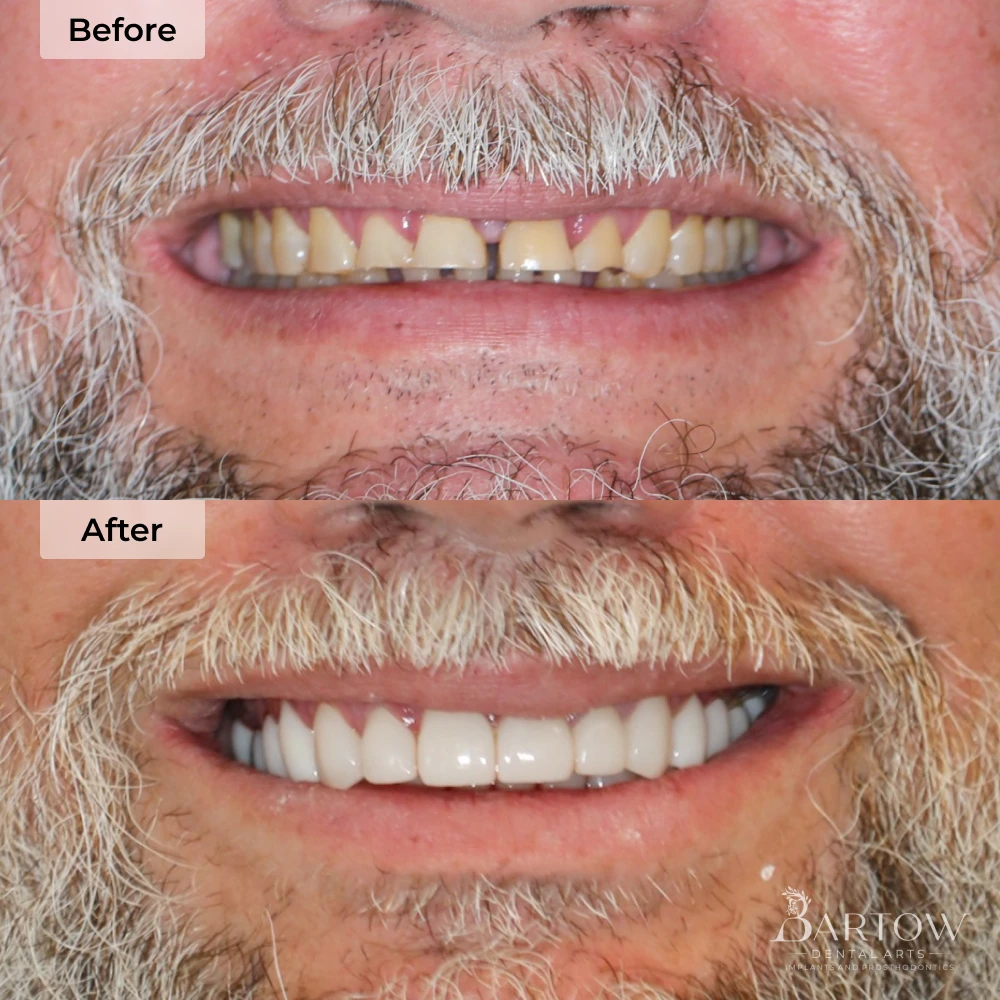
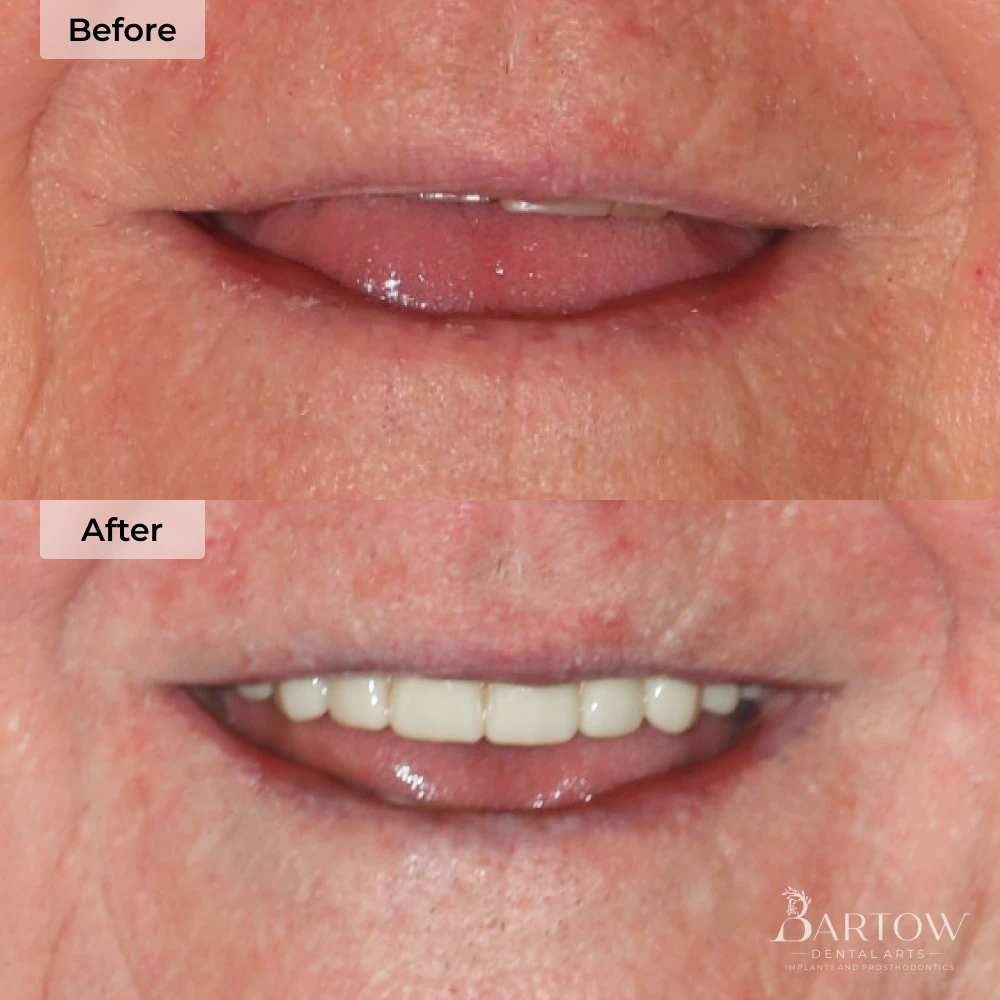
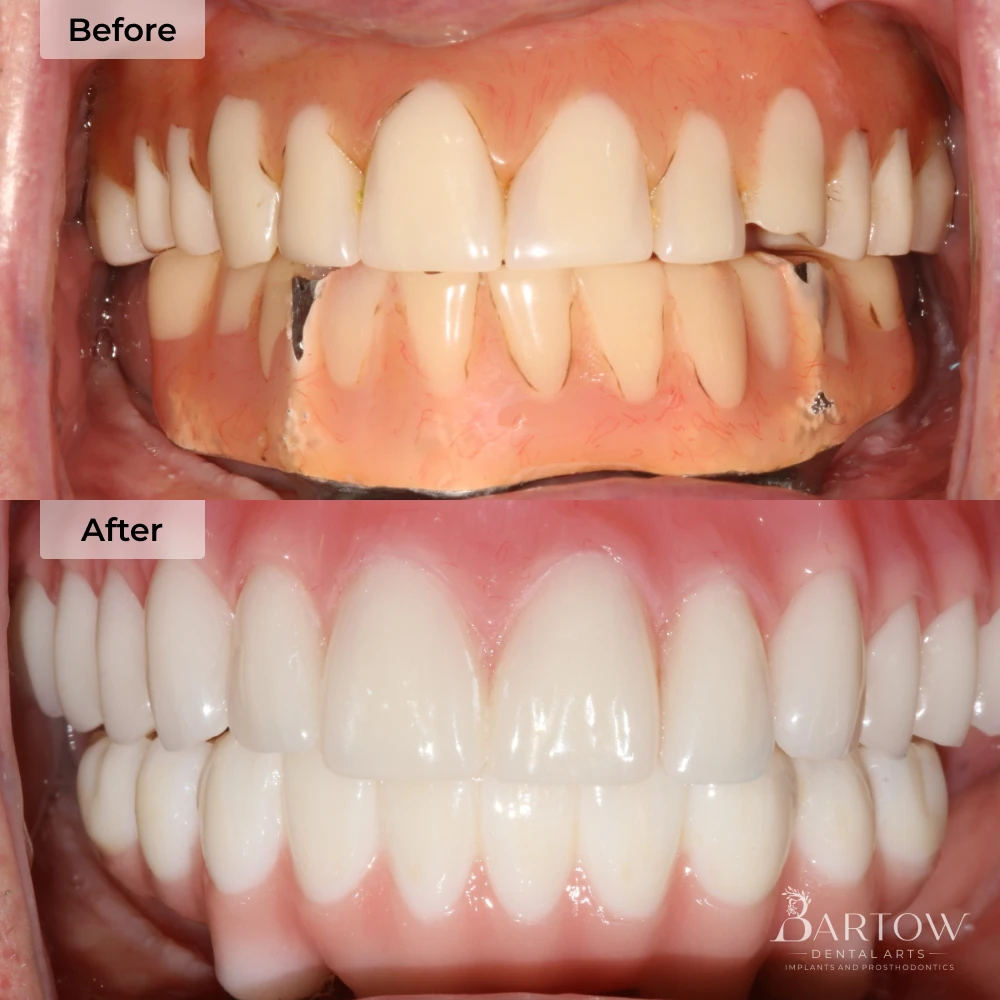
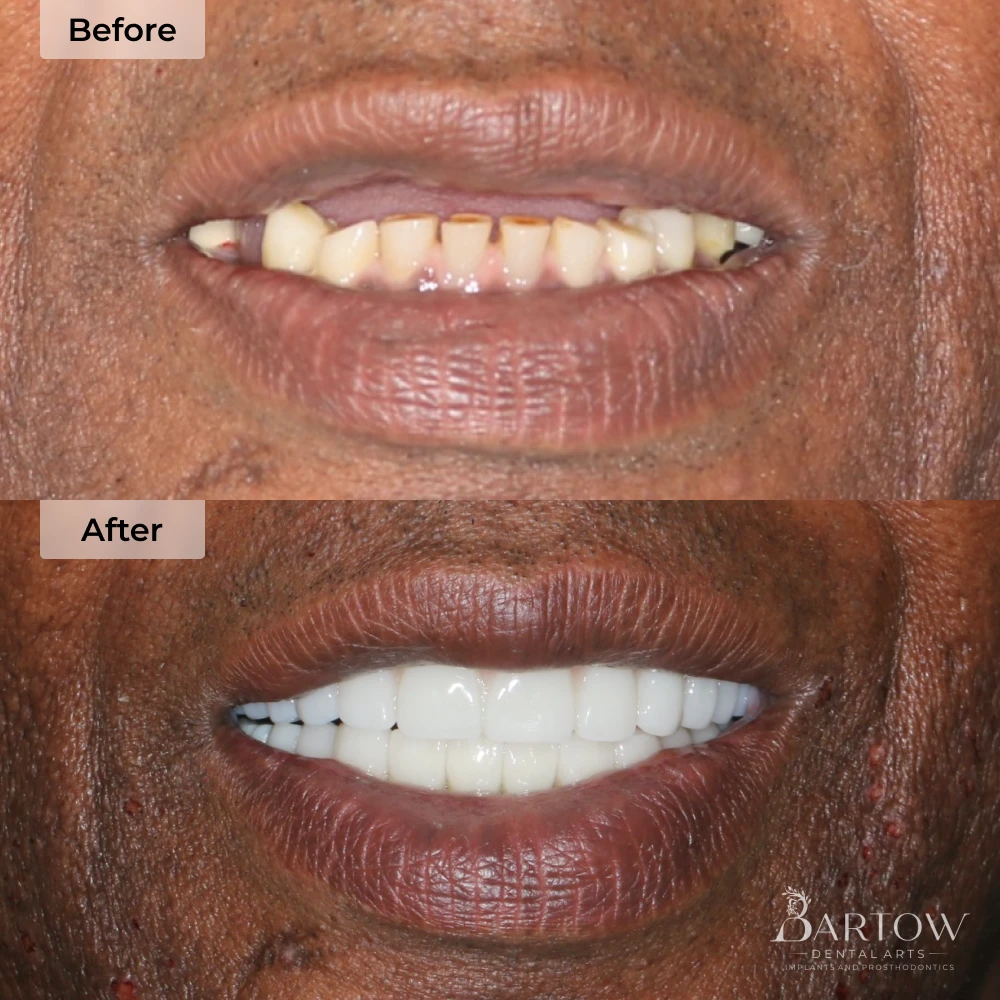
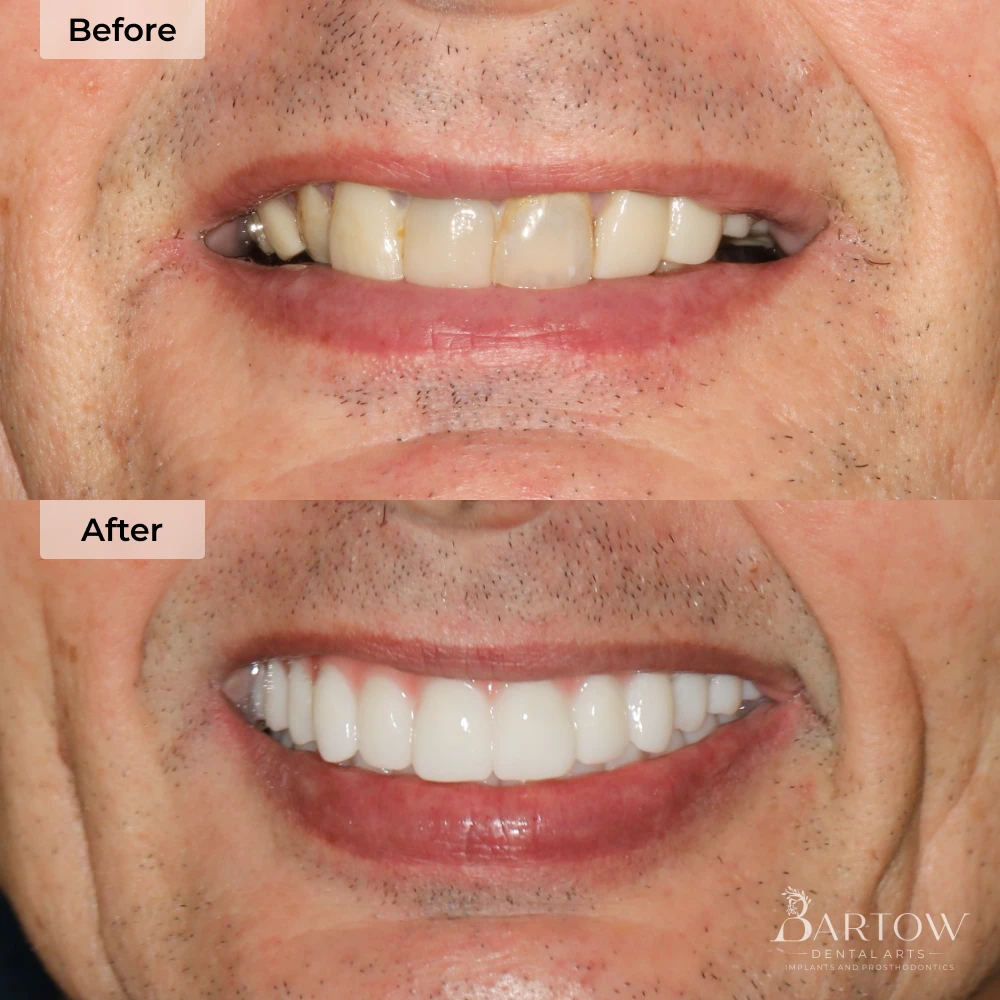
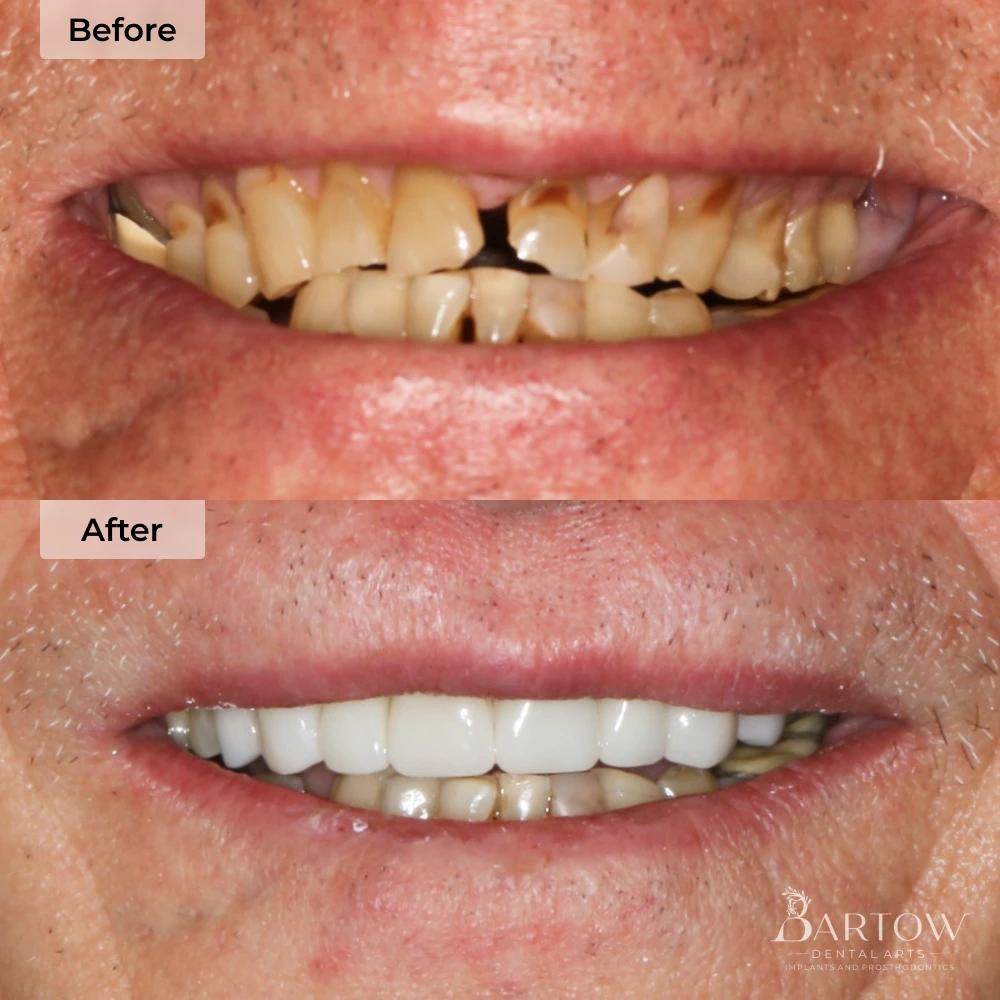
Every case is individual. Photographs show one patient’s result and cannot establish what treatment is right for you. Individual results may vary.
It depends on the plan. Some cases are finished in a few months; others are staged over a year or more, especially when extractions, grafting, or implant healing are involved. You’ll get an expected sequence at your consultation, including where temporary restorations fit in and when we’ll review progress before moving to later steps.
No. Temporary restorations are part of the plan from the start. You’ll leave every appointment with teeth.
Often, no. Many reconstructions can be phased over time, with the most urgent work first. Some sequences do need to stay together clinically – that gets explained up front so you can plan around it.
Full-arch implants replace all the teeth in an arch with a fixed implant-supported restoration. A full mouth reconstruction is broader – it may include full-arch implants, or it may restore and keep your natural teeth. The evaluation determines which applies to you.
Dental insurance usually covers portions of full mouth reconstruction. Restorative treatment is often partially covered even when cosmetic work isn’t. We’ll review your specific coverage once the plan is set.
No. Patients who’ve avoided care for a long time are often great candidates for full mouth reconstruction. Dr. Parmar regularly sees patients who have neglected their dental health, and nobody at our office is going to lecture your about it.
We are happy to help you book an appointment or answer your questions. Please fill out our contact form and we will get back to you shortly!